
Who are we?
This project was undertaken by members of the Ecohydrological Systems (ECOHYDROS) Laboratory, affiliated with the Department of Earth and Planetary Sciences and the Department of Geography at McGill University. We combine water science and ecosystem science to examine the normal behaviour of hydrological systems, such as rivers and their watersheds, and analyze changes to that normal behaviour under the influence of stressors such as extreme weather events, pollution, land cover change, and climate change.
Core Team
Genevieve Ali
Associate Professor of Ecohydrology
Department of Earth & Planetary Sciences | Department of Geography, McGill University
Genevieve Ali obtained a bachelor’s with Honours and a Ph.D. in environmental geography at the Université de Montréal, specializing in catchment hydrology, before pursuing her postdoctoral research at the Northern Rivers Institute in Aberdeen, Scotland, where she expanded her expertise into ecohydrology. She held faculty positions first at the University of Manitoba, then the University of Guelph, before returning to her hometown of Montreal to join McGill as an associate professor in August 2022. She is currently cross-appointed to the Department of Earth and Planetary Sciences and the Department of Geography. Genevieve founded the Ecohydrological Systems (ECOHYDROS) Laboratory to combine her areas of expertise—physical geography, ecohydrology, and complex systems science—under a unified research umbrella.
The importance of water, to Genevieve, lies in its multifaceted nature. It is a precious resource required for human and ecosystem health; it is somewhat renewable, but not indefinite; it has shaped cultures, supports livelihoods and recreational activities; and it can present a threat to those same livelihoods and activities. Being a hydrologist allows her to study those facets and their interactions, learning from and about humans and nature in an integrated way.
Outside of the lab, Genevieve enjoys beaches, mystery TV shows and novels, and knitting. In another life, she might have been a volcanologist.
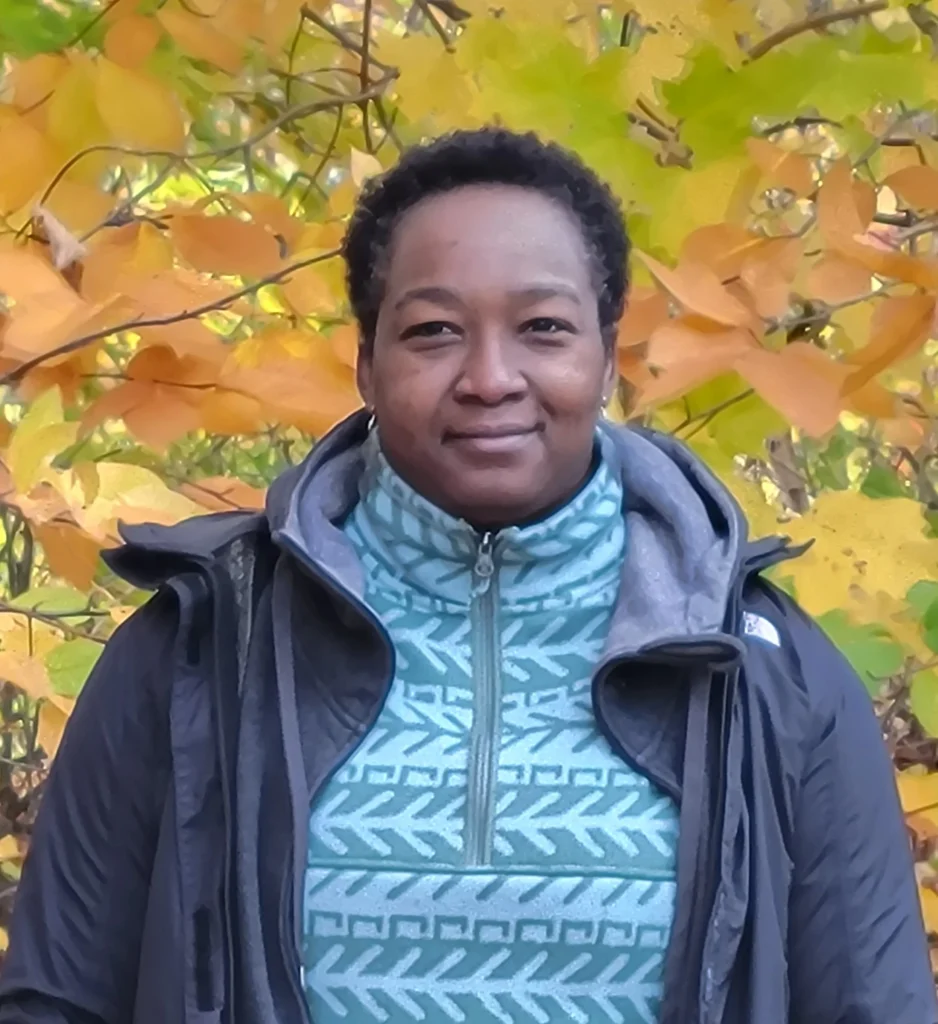
Sarah Ariano
Formerly postdoctoral researcher, Department of Earth & Planetary Sciences, McGill University
Currently Assistant Professor, Department of Earth Sciences, University of Toronto
Dr. Sarah Ariano is an assistant professor in the Department of Earth Sciences at the University of Toronto. She pursued her bachelor’s degree in physical geography at the University of Toronto Mississauga, her master’s in geography at the University of Toronto, and obtained her PhD in environmental applied science and management at Toronto Metropolitan University before coming to McGill as a postdoctoral researcher. Her recent appointment at U of T has brought her back to Ontario, but her work on Quebec’s rivers continues via her association with the Ecohydrological Systems Laboratory. For the ECOHYDROS Lab, she performs secondary historical data extraction, processing, and analysis for projects across Quebec and Canada, and writes scientific reports that communicate the Lab’s work to a wider audience.
Sarah’s focus on hydrology stems from her interest in how water and water-soluble contaminants move through environments, and how this small-scale phenomenon, among others, can have impacts on the watershed scale. Her research aims to advance the understanding and management of water not only from a scientific perspective, but also for policy, planning, and decision-making at provincial and federal levels.
Sarah’s other research interests include urban hydrology and biogeosciences. Learn more about her research here.

Corinne Arson
Research assistant, ECOHYDROS Lab
B.Sc. in Environment (graduating in late 2025)
Corinne is a third-year undergraduate student in McGill’s Faculty of Agricultural and Environmental Sciences, majoring in Environment and specializing in Water Environments and Ecosystems. With ECOHYDROS, she works mainly on the Arrhythmic Rivers website, creating content and doing research for it. Over the summer of 2024, she also helped collect and analyze samples during the fieldwork season.
Her first job was as a bottling assistant operator in a factory that produced health supplements, but after two summers working there, she decided to look for jobs that were more in line with her field. She began working as an environmental awareness officer for her home municipality of Vaudreuil-Dorion, where she stayed for two summers, and would have returned in the summer of 2024, had she not heard about and been accepted to work as a research assistant in the Ecohydrological Systems Laboratory. She was excited for the opportunity to participate in research and discover more of her field of study. This experience has taught her not only about hydrology, but also about its impacts on other fields like ecology and biology.
When not researching Quebec’s rivers, Corinne enjoys reading, listening to music and going to concerts, playing video games, and spending time in nature.

Leoscar-Gabriel Morales-Guillén
Research assistant, ECOHYDROS Lab
B.Sc. in Geography (graduating in spring 2025)
Gabriel is an undergraduate student from Longueuil, Quebec. He has been drawn to the sciences since late high school, choosing to specialize in natural sciences in CEGEP and beginning his Bachelor’s of Science in Geography at McGill in 2022.
Gabriel began his career path as a sports field supervisor for baseball and spent time working as a services assistant at Costco before joining the Ecohydrological Systems Laboratory in the summer of 2024. Since then, he has performed field research at Gault Nature Reserve, processed samples in the lab, and performed statistical and GIS data analysis. He initially applied for the position because of his passion for field work, because he was interested in hydrology after having taken a course on it taught by the Lab’s supervisor, and because he wanted to develop his data analysis skills, and has found the Lab’s diverse interests more than living up to his expectations.
Gabriel’s interest in water stems from how it is omnipresent but precious, and simple in molecular structure despite its complex and unique properties. As fascinated as he is by the scientific analysis of water, he also appreciates its recreational aspects and enjoys swimming and contemplating the natural beauty of aquatic environments.

Seonaid Newell-Macintosh
Researcher, ECOHYDROS Lab
B.Sc. in Environment (graduating in late 2025)
A late-comer to the field of environment coming from a background in psychology, Seonaid began their second Bachelor’s in Environment at McGill in 2022 after having rediscovered a passion for nature during the pandemic. Since beginning their studies, they have worked on a climate-curriculum-writing project for John Abbot College, performed volunteer research for environmental justice causes, and, most recently, worked in Dr. Geneviève Ali’s Ecohydrological Systems Laboratory. Here, they are helping to develop content for this website and other science outreach projects and assisting with the set-up of a long-term riparian monitoring network at McGill’s Gault Nature Reserve.
Hydrology, to Seonaid, is connection; waterways reflect topography, tell us about flows we can’t see underground, provide life to plants and animals upstream and downstream, are individually changeable and yet their network remains constant, linking the oceans, sky, and land. Growing up in Montreal, Seonaid always had a passion for forest streams when able to get out of the city, and is enjoying revisiting that interest in a scientific capacity.
Outside the realm of academia, Seonaid enjoys mycophagy, games, politics and activism, science fiction, picking up new arts and crafts for a month and then forgetting about them, and cosmology and particle physics.

Olivier Grégoire
Research assistant, ECOHYDROS Lab
B.A. & Sc. Interfaculty program in Sustainability, Science and Society (graduating in spring 2025)
Olivier is an undergraduate research assistant in the fourth and final year of his undergraduate studies in McGill’s interfaculty program of Sustainability, Science and Society. At the Ecohydrological Systems Laboratory, he is currently performing research on the Rivière des Hurons, a highly polluted river in Montérégie, Quebec, looking into how it responds to extreme rainfall events.
His first summer job was as a summer day-camp counsellor, where he worked for 5 years before switching to landscaping for his home municipality of Saint-Aubert. These jobs led him to realize just how important it was for him to work outside at least part-time. His first field research job was in a soil science laboratory at McGill in the summer of 2023, where he helped plan and took part in two extended field trips. When the opportunity arose to do field work again in summer 2024, this time in hydrology, he was excited to spend more time in the field and contribute to the team as a project leader, and to apply his theoretical knowledge of hydrology to real-world research here in Quebec.
Olivier is a very active person, and he loves sports. He has done track and field since the age of 12 and is currently part of McGill’s team as a pole vaulter. He also enjoys playing music, especially the guitar and electric bass.

key collaborators
Pierre Arson
Designer
Pierre Arson is an experienced multimedia designer and communicator, and also Corinne’s father. The Arrhythmic Rivers Logo was created and developed by Mr. Arson.
An explorer of the outdoors, virtual worlds and creativity, always ready to discover and push the limits of the imagination, Mr. Arson creates assets to bring joy to others in a thoughtful and detail-oriented way.
Pierre Arson is an experienced multimedia designer and communicator, and also Corinne’s father. The Arrhythmic Rivers Logo was created and developed by Mr. Arson.
An explorer of the outdoors, virtual worlds and creativity, always ready to discover and push the limits of the imagination, Mr. Arson creates assets to bring joy to others in a thoughtful and detail-oriented way.

Tim Elrick
Faculty Lecturer & Director of the GIC, Department of Geography, McGill University.
Tim leads McGill’s Geographic Information Centre and specializes in geospatial data science. He facilitated our access to the online ArcGIS platform (Enterprise license), which was critical for the development of an interactive map for this website.
Tim leads McGill’s Geographic Information Centre and specializes in geospatial data science. He facilitated our access to the online ArcGIS platform (Enterprise license), which was critical for the development of an interactive map for this website.
Ruilan Shi
Chief GIS technician, Department of Geography, McGill University.
Ruilan Shi is the Chief GIS technician in McGill’s Geographic Information Centre. She assisted with the development of an interactive map for this website. Ruilan specializes in ArcGIS mapping software.
Ruilan Shi is the Chief GIS technician in McGill’s Geographic Information Centre. She assisted with the development of an interactive map for this website. Ruilan specializes in ArcGIS mapping software.

Sichen Wan
Former assistant researcher at McGill’s Geographic Information Centre
Currently GIS Consultant at Esri Canada
Sichen has a Master’s degree in Geography from McGill University, where she specialized in GIS and artificial intelligence. In the summer of 2024, she assisted with the development of Arrhythmic Rivers’ Interactive Map.
Sichen has a Master’s degree in Geography from McGill University, where she specialized in GIS and artificial intelligence. In the summer of 2024, she assisted with the development of Arrhythmic Rivers’ Interactive Map.
